A Year of Hackathons
A first timer's retrospective
In 2025 I tried hackathons for the first time. I wanted to learn from shipping quickly, meet people who I could build with, test ideas and see how new tools for building could be used.
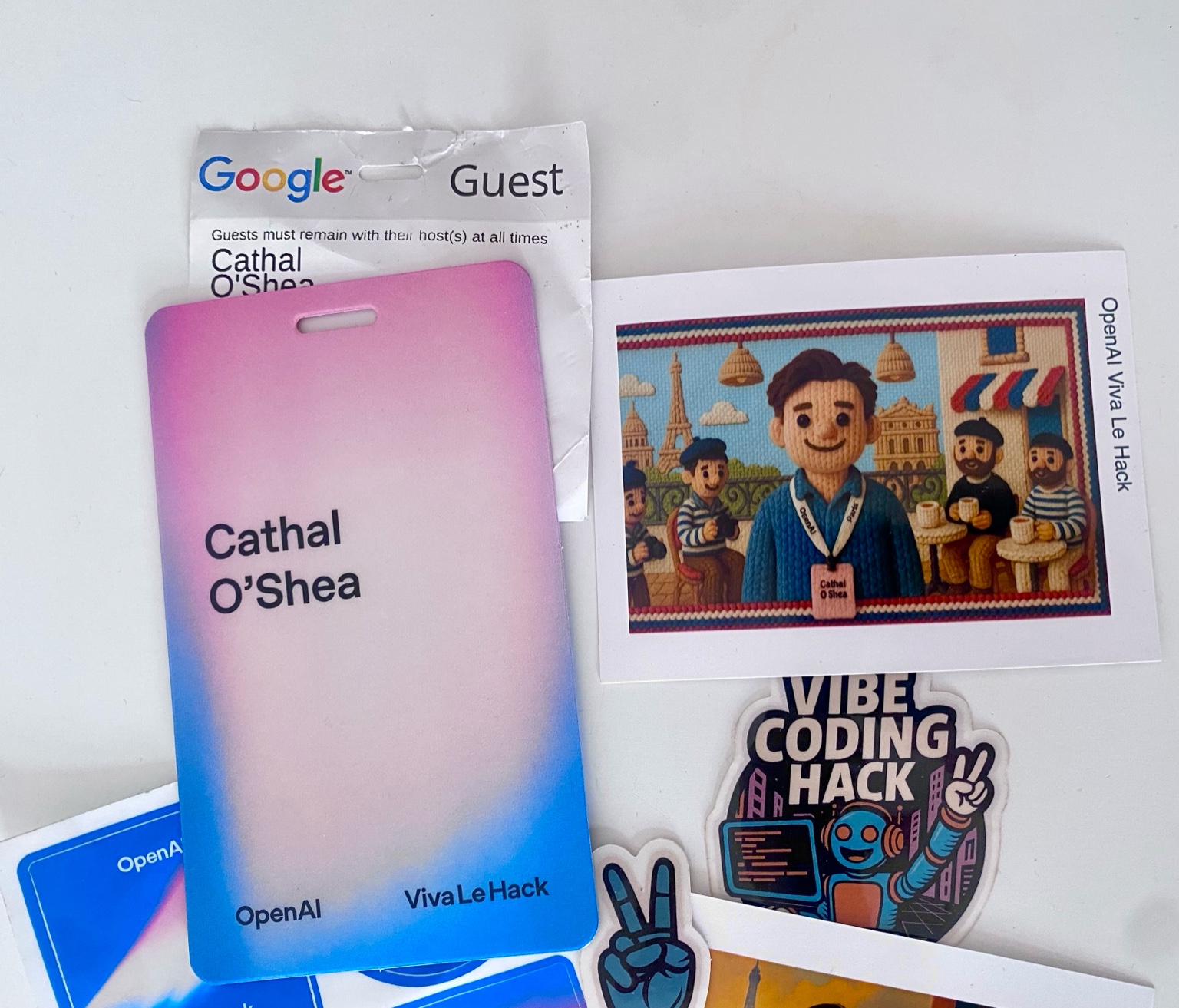
The wide range of hackathons
There are many different hack themes. The project briefs for events I went to spanned chatbots, audio interfaces, agent focused and more. Over the year I attended hackathons focused on government, health and topics such as creative tools. Some hacks ran for a full weekend, others ran for only a couple of hours. Shorter sessions have emerged as modern AI tools like Cursor and Lovable let you spin up prototypes quickly. These code generation products have also enabled a wider range of people to build more, something you can clearly see at these events.
In big cities like London, there are hackathons to attend pretty much every week. And if you're not based in a big city (or getting to a big city is too difficult), you can attend a remote hackathon where people from all over the globe try to build (which brings its own exciting angle). The amount of different options mean you can always find a specific hackathon that fits your area of interest, as well as having a quick way to learn more about areas that are new to you.
Why hackathons work
You get forced output. You have a deadline to submit something that you can demo by the end of the event. There's no time to over‑engineer so you learn to cut scope and build the essential core. And new tools help you test new products quickly.
You meet builders you'd not meet otherwise. Hackathons compress relationship building. Working through bugs under time pressure shows you who you can communicate well with and who you could potentially partner with after the hack too.
You learn about new tools. When you try out new models or other tools, you get to learn the surprising things that these tools are capable of achieving. And you also find the surprising ways in which they are still limited in their capabilities. Many of these events are run by the tool creators themselves; if Google, OpenAI or ElevenLabs are running the hack they normally will have representatives from the company at the event, which is great as you get 1 to 1 support from people who in many cases were involved in creating the very tool you're looking to leverage!

Lessons I learnt over time
Time pressure clarifies what matters. A good hackathon project is one that you can demonstrate by the end of the event. In my first attempts I tried to build too much and often missed the submission deadline. Initially it's hard to know what's possible in a two‑hour mini‑hack versus a weekend. After a few events, you start to calibrate. You learn to stop polishing early, leave time for deployment and some testing to get submissions in on time. The constraint forces focus and shows you what's essential.
Starting from what you want to demo generally works well. Decide what story you'll tell on stage, then work backwards and build only what supports that. It's important to keep in mind that what you plan to create does not have to be production ready. A simple, clear demonstration is what matters.
Teams benefit from diverse skills. To encourage collaboration, many hackathons require you to work in teams to submit a project. Your team rarely has all the capabilities that could be useful, but the best teams mix coding, design and storytelling skills from across different members of the team to build something impressive.
Tips if you're considering your first hackathon
-
→
Join a team. You'll learn more and build faster together. Form a team beforehand or, failing that, join one on the day. Cross‑functional teams are more effective and you'll leave with stronger relationships.
-
→
Arrive with a direction. If you can do a little bit of prep before the event, come up with a rough idea of the problem space, tool or theme you want to explore. It helps you find a team quickly and get things moving when you have limited time.
-
→
Go even if you think you won't win. At least for me, most of the value is in building, learning and meeting people. Focus on those and let anything else be a bonus.
-
→
Consider remote and in person hacks. If you're not near a big tech hub / unable to travel, join an online hackathon.
Closing thoughts
Hackathons are a way to build momentum and connect with an interesting community. The AI era has enabled shorter events, broadened the group of people who can participate and brought a new buzz to building. There's a growing ecosystem of organisers, judges and regular participants. There is a lot that people give to make these things possible. Mentors, normally with very busy day jobs, come to support participants with building cool stuff. The offices of various players in tech (VC firms, big tech companies) are provided as spaces for the events to happen in. And volunteers work to keep up to date with all the events that are happening and share with others to keep them informed. All of this is done with most events being free to attend, which is good for ensuring a wide group of people are able to participate in these hacks.
2025 was a great year for getting involved with hackathons. In 2026, I would like to continue making things with the people I've met at hacks, carrying forward prototypes and taking ideas further. Hackathons have provided experience in building under pressure, a network of people I'm excited to work with and a new sense of what's possible. Good things to take into the new year!